Studies in Mosaics (Palestine)
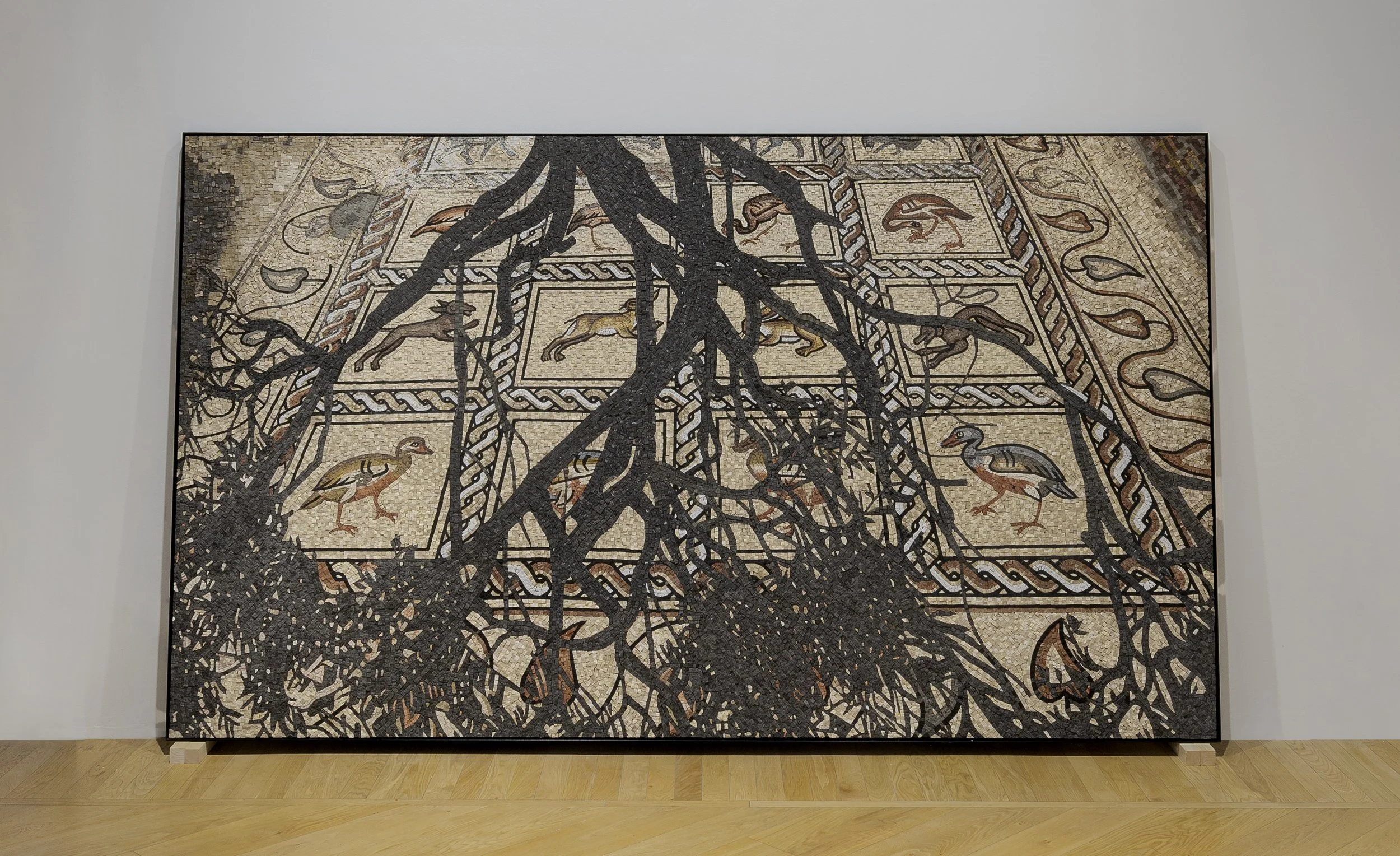
Olive in the sun
Mosaic, 2.62 × 1.3 m
2025
The olive trees in the orchard of Salman al-Nabahin in the Bureij refugee camp in Gaza were not taking root properly. He and his son Ahmad wanted to identify the cause.
In 2022, they dug up the ground and uncovered a Byzantine-era mosaic dated between the 5th and 8th centuries. The large mosaic features a grid illustrated with wild
and domestic animals. Located near the Israeli border, the site is currently inaccessible in the no-man’s land established by the Israeli army in March 2025.
Olive in the sun features part of the original mosaic with the shadow of the olive tree now inscribed in it. Where pine trees have been used as a colonial strategy
to de-historicize the land by burying hundreds of Palestinian villages underneath, the olive tree here points to and coalesces with the history of the land.
Mosaics produced in collaboration with mosaicist Abdel Mon’em Barakat
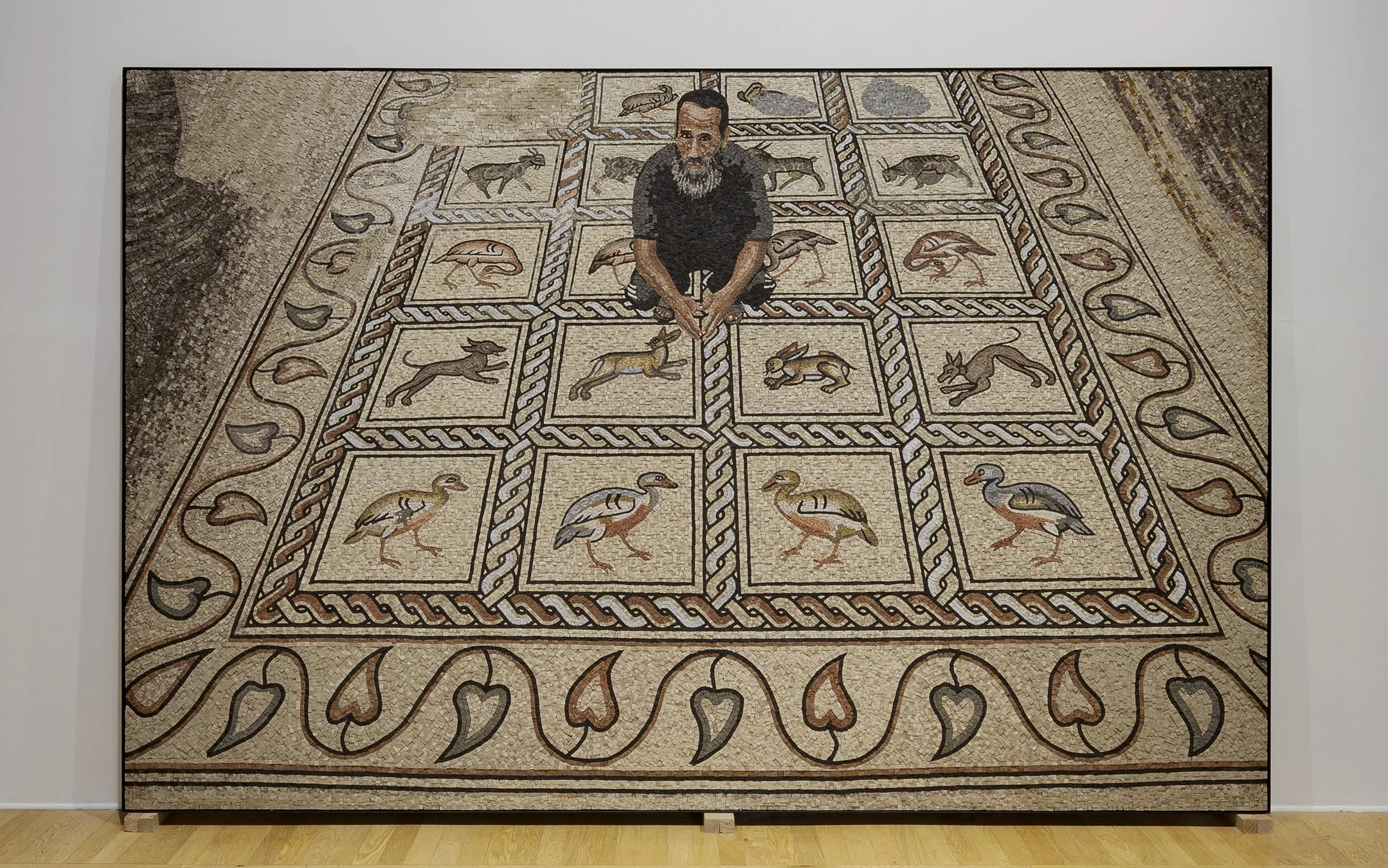
Salman in a squat
Mosaic, 3 × 1.93 m
2025
In Salman in a squat, Slaman al-Nabahin crouches above the newly discovered mosaic, cozily sitting amongst the animals in the orchard, appearing serene, like a suspended presence,
while we remain unaware of his and his son’s fate amidst the genocide.
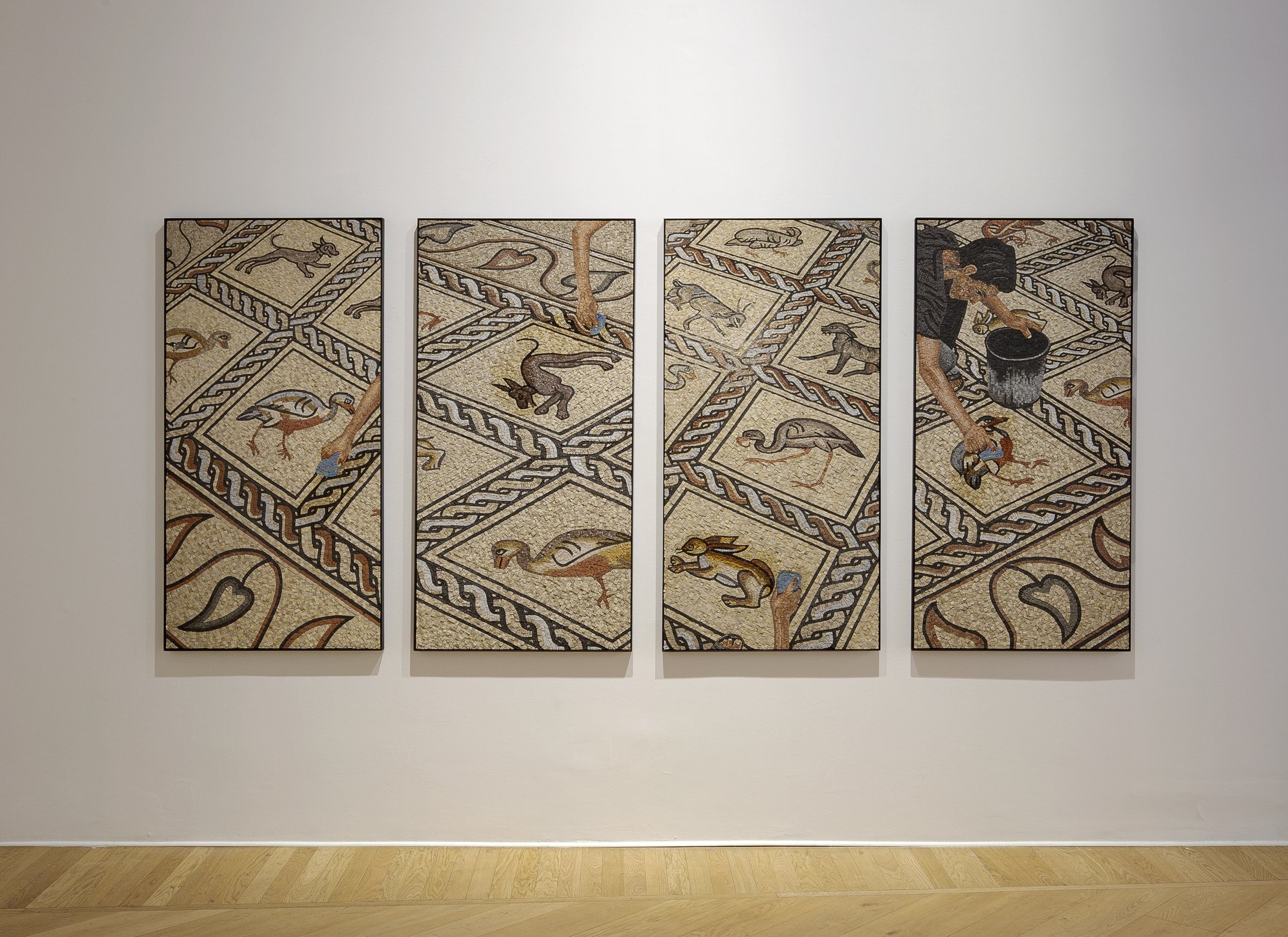
Ahmad with the sponge
Mosaic, 0.68 × 1.37 m each
2025
Ahmad with the sponge depicts the Bureij mosaic from 4 different angles, with Ahmad’s hand delicately cleaning it with a sponge, attempting to bring back the vivid colors of the mosaic.